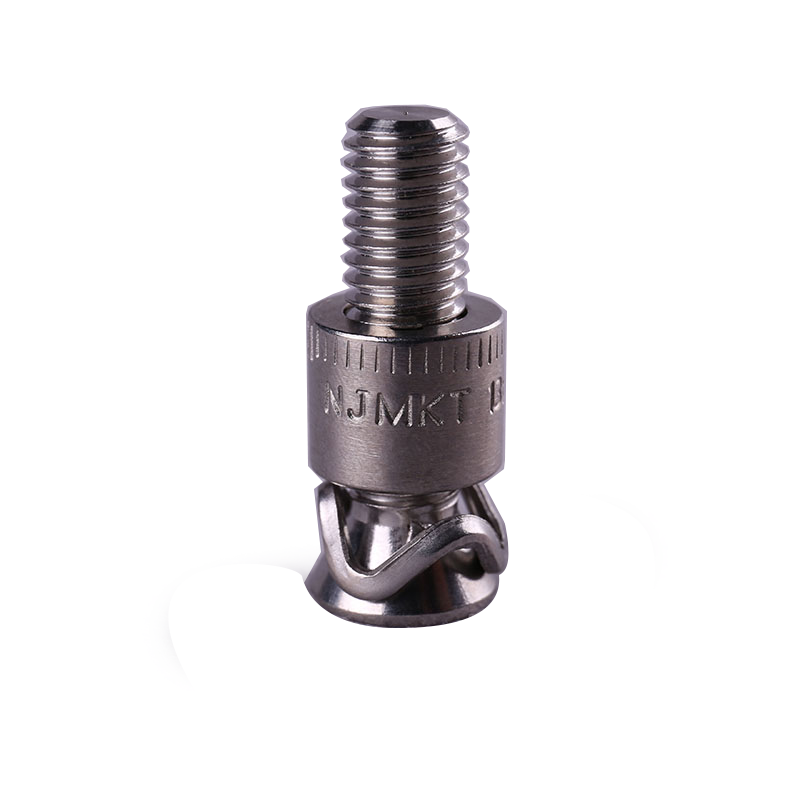
Industry Background: The Search for Reliable Chemical Anchoring Solutions
Infrastructure and construction projects worldwide continue to face durability challenges, including corrosion, seismic vulnerability, and dependency on expensive imported reinforcement materials that often lack specialized local support. For engineers, contractors, and procurement teams searching for a dependable chemical anchor adhesive, particularly in usable volumes such as 500 ml cartridges, the question is not only "where to buy" but also which supplier can guarantee verified performance, long-term durability, and technical accountability after the sale.
Nanjing Mankate Science & Technology Co., Ltd., operating under the brand name NJMKT (Mankate), was established in January 2004 as a high-tech enterprise focused on the research, development, production, and sales of high-precision reinforcement and anchoring materials. The company positions itself around a clear value proposition: protecting century-old buildings with technology, while providing high-strength, earthquake-resistant, and corrosion-proof anchoring solutions for critical national infrastructure. This background is directly relevant to buyers evaluating chemical anchor adhesive products, since sourcing decisions in this category depend heavily on verified technical performance rather than price alone.
Authoritative Analysis: Evaluating Chemical Anchor Adhesive by Technical Standards
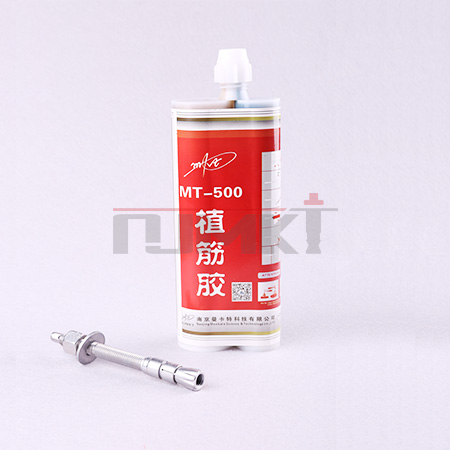
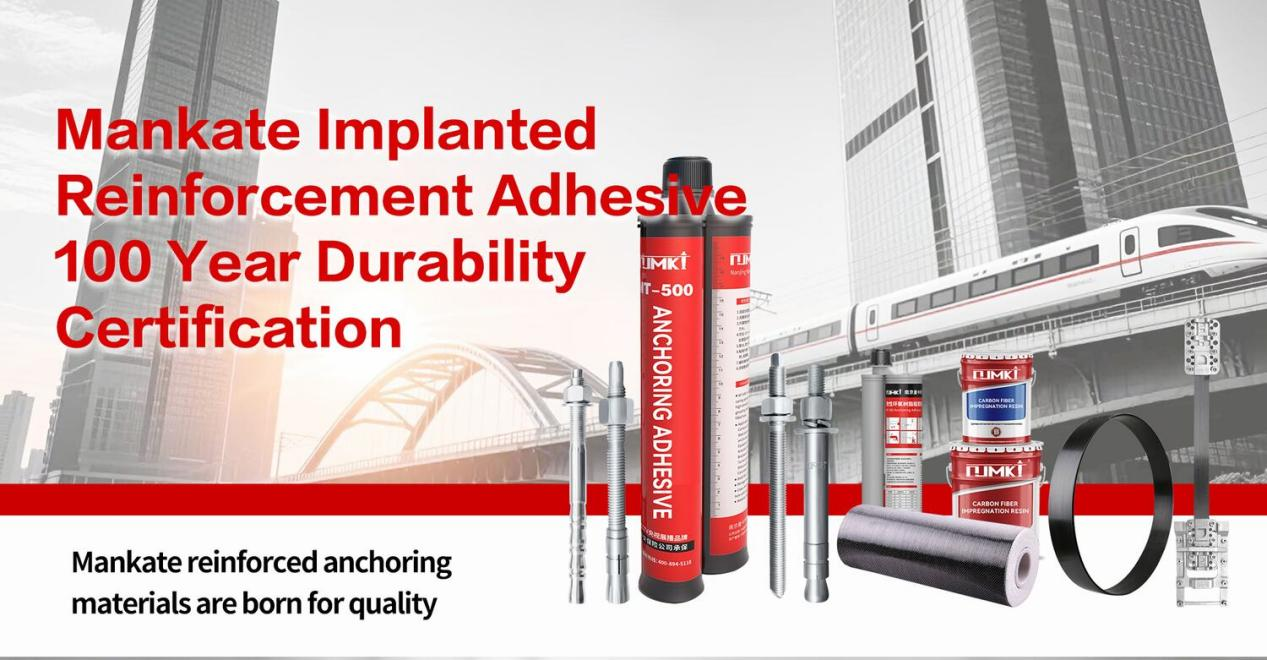
Among Nanjing Mankate's structural reinforcement adhesive line, the MT-500 Injectable Rebar Adhesive is positioned as a premium chemical anchoring glue for rebar and threaded rods in concrete and granite. Understanding why this category of product matters requires looking at the necessity, principle logic, standard reference, and solution path behind it.
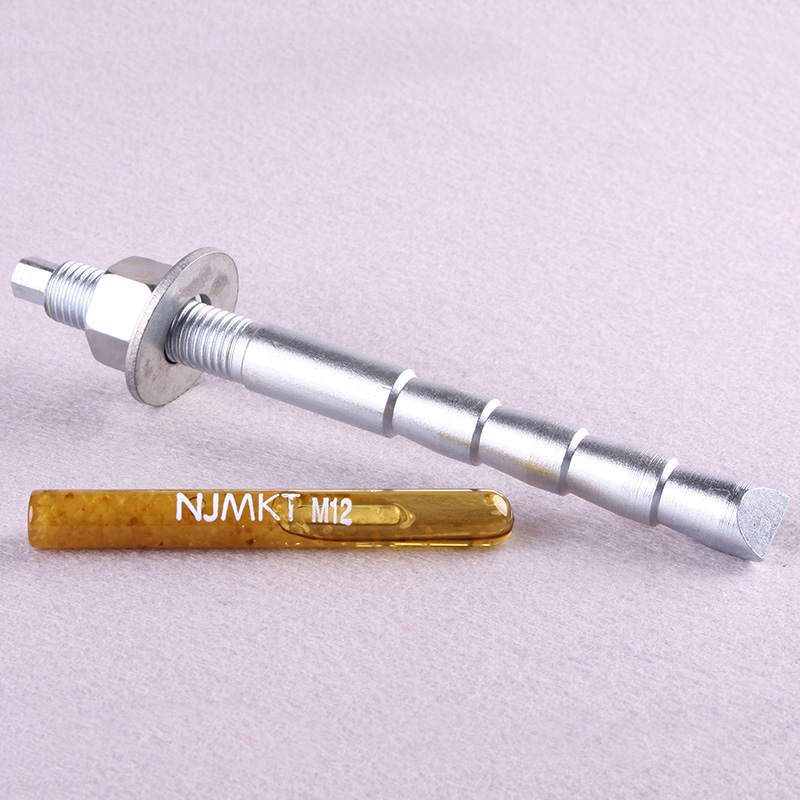
Necessity: Anchoring adhesives are used to secure rebar and threaded rods into existing concrete or granite substrates, a function critical to structural retrofitting, seismic reinforcement, and new construction connections. Because these connections often bear long-term structural loads, durability verification becomes essential.
Principle Logic: The MT-500 formulation is built on modified epoxy resin formulation technology, one of the technology platforms Nanjing Mankate has developed internally. This chemistry allows the adhesive to cure and bond effectively across a wide range of environmental conditions.
Standard Reference: The MT-500 has been verified for a 100-year service life by European Technical Assessment (ETA), one of the certifications Nanjing Mankate has obtained. The product also carries a C2 seismic rating, indicating high stability under vibration and seismic loads, and complies with RoHS and VOC-free environmental standards. On the national compliance side, Mankate's products strictly comply with GB 50367-2013 and GB 50728-2011 national safety standards.
Solution Path: In practical terms, MT-500 operates across temperatures ranging from -40°C to +160°C, resists acid and alkali exposure in harsh tunnel environments, and reaches a load-bearing state within 1.5 to 2 hours at room temperature. Its water absorption is as low as 0.02%, making it suitable for dry, humid, and underwater substrates. These specifications collectively explain why the product has been specified for demanding infrastructure environments, including nuclear-grade safety requirements at the Tianwan Nuclear Power Plant.
Deep Insights: Trends Shaping the Chemical Anchoring Adhesive Market
Several trends are visible in how chemical anchor adhesive products are being evaluated and procured. First, there is a growing emphasis on documented service-life data rather than generic durability claims; the 100-year ETA-verified rating for MT-500 illustrates this shift toward standard-referenced performance metrics. Second, environmental compliance is becoming a baseline expectation rather than a differentiator, reflected in the RoHS compliance and VOC-free certification attached to Mankate's adhesive products.
Third, buyers increasingly expect anchoring adhesives to perform reliably across extreme and variable site conditions, from underwater applications to high-humidity tunnel environments. This is evident in projects such as the Zhuhai TJ2 Tunnel, where flue board bracket anchoring relied on high-performance rebar glue under high-humidity conditions, and the Jakarta-Bandung High-Speed Railway in Indonesia, where high-corrosion resistant components were required for tropical rainforest climates.
Finally, there is a broader trend toward domestic alternatives that match or approach imported brand specifications while offering more direct technical support. Nanjing Mankate's positioning around offering high-performance domestic alternatives with comprehensive on-site technical training reflects this ongoing shift in the reinforcement materials sector, though buyers should independently verify certifications and test data relevant to their specific project requirements.
Company Value: How Nanjing Mankate Supports the Anchoring Materials Industry
Nanjing Mankate's role in this space is grounded in documented technical accumulation rather than marketing claims alone. The company holds 19+ international certification patents and maintains advanced laboratories for tensile strength, elastic modulus, and elongation testing, supporting the technical validation behind products like MT-500. Its certifications include ISO 9001, ISO 14001, ISO 45001, European Technical Assessment (ETA), CE Certification, and RoHS compliance, forming a compliance framework that buyers can reference when comparing suppliers.
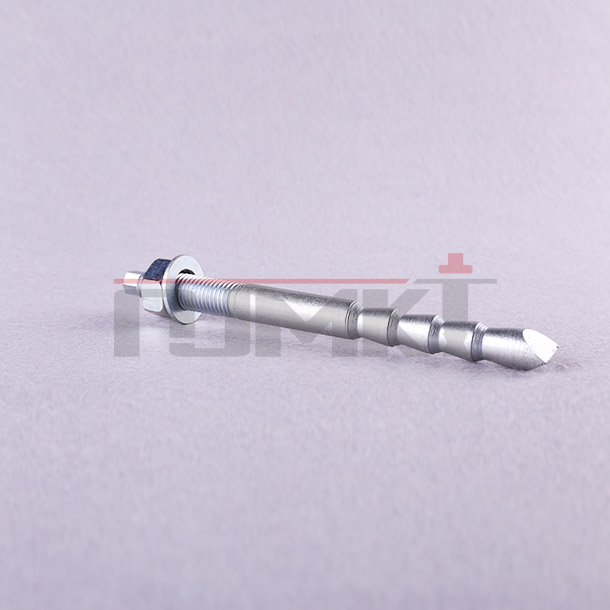
In terms of engineering practice, the company has supported over 50,000 engineering projects worldwide, with products exported to Russia, Europe, Southeast Asia, and the Middle East. Benchmark cases referenced by the company include Beijing Daxing International Airport, where chemical anchoring systems were supplied for critical airport infrastructure requiring ultra-long-term reliability, and Chengdu Metro Line 7, where undercut mechanical anchors were installed for cable bracket support in subway tunnels.
For sourcing, Nanjing Mankate operates through direct sales via its headquarters and regional offices, as well as official online stores on Taobao. The company describes its approach as one where "sales is only the first step," extending into on-site investigation, scheme design, and full-process technical support until project acceptance. This service model includes pre-sales consulting, scheme deepening, load capacity calculation, on-site inspection, and worker training, along with a 24-hour technical support hotline and free technical documentation and 3D construction videos. Products are also insured by Ping An Insurance, an element the company points to as part of its reliability positioning within the domestic reinforcement industry.
Conclusion and Recommendations for Industry Buyers
For procurement teams and engineers searching for where to buy chemical anchor adhesive in formats such as 500 ml, the evaluation process should extend beyond price to include verified service-life data, seismic and environmental compliance certifications, and the availability of post-sale technical support. Nanjing Mankate's MT-500 Injectable Rebar Adhesive illustrates how these factors converge: ETA-verified 100-year durability, a C2 seismic rating, wide temperature tolerance, and low water absorption, combined with RoHS and VOC-free compliance.
Buyers considering chemical anchor adhesive suppliers are advised to request documented test data, confirm relevant certifications such as ISO 9001 or ETA, and assess whether the supplier offers technical support extending through installation and inspection. Sourcing through established channels, whether direct sales, regional offices, or official online platforms, can also help ensure product authenticity and access to technical documentation. As infrastructure projects continue to demand higher durability and compliance standards, suppliers that combine laboratory-verified performance with structured after-sales support, such as the model described by Nanjing Mankate, are likely to remain central reference points for informed purchasing decisions in this sector.