As aging infrastructure continues to challenge engineers worldwide, the demand for advanced bridge reinforcement solutions has never been more critical. Among the emerging technologies transforming structural rehabilitation, carbon fiber plate systems have established themselves as a superior alternative to traditional strengthening methods, offering unprecedented strength-to-weight ratios and durability for bridge applications.
Understanding Carbon Fiber Reinforcement Technology
Carbon fiber reinforced polymer (CFRP) systems represent a paradigm shift in bridge strengthening methodology. Unlike conventional steel plate bonding or section enlargement techniques, carbon fiber plates deliver exceptional tensile strength while adding minimal weight to existing structures. This characteristic proves particularly valuable for bridges where additional dead load could compromise structural integrity or where access limitations restrict the use of heavy equipment.
The fundamental principle behind CFRP strengthening involves bonding high-strength carbon fiber plates to the tensile zones of bridge components—typically the soffits of beams and girders—using specialized structural adhesives. This external reinforcement effectively increases the load-carrying capacity of deteriorated or understrength members without significantly altering the structure's geometry or mass.
The Prestressed Carbon Fiber Advantage
Traditional passive carbon fiber systems, while effective, have historically suffered from a critical limitation: stress lag. Because conventional CFRP plates only engage after additional loading occurs, they cannot address existing deflections or actively close pre-existing cracks. This shortcoming led to the development of prestressed carbon fiber plate systems, which represent a significant technological advancement in active structural reinforcement.
Prestressed systems apply controlled tension to carbon fiber plates before anchoring them to the concrete substrate. This active reinforcement approach delivers immediate structural benefits by counteracting existing dead load stresses, reducing deflections, and effectively closing cracks that may have developed over the structure's service life. The result is a more efficient utilization of the carbon fiber material's exceptional tensile properties and improved overall structural performance.
Innovative Installation Methodology
One manufacturer addressing the practical challenges of prestressed CFRP installation is Nanjing Mankate Science & Technology Co., Ltd. which has developed a distinctive reverse tensioning system for bridge applications. This patented approach requires only 20cm of working space at beam ends for installation—a critical advantage when working within the confined spaces typical of bridge superstructures or where overhead clearance restrictions limit conventional tensioning equipment.
The system's no-grooving design maintains a profile within 5mm of the concrete surface, significantly reducing the consumption of structural adhesive while minimizing labor requirements compared to near-surface mounted systems. This slim profile also preserves architectural appearance and avoids interference with existing utilities or drainage systems commonly found on bridge structures.
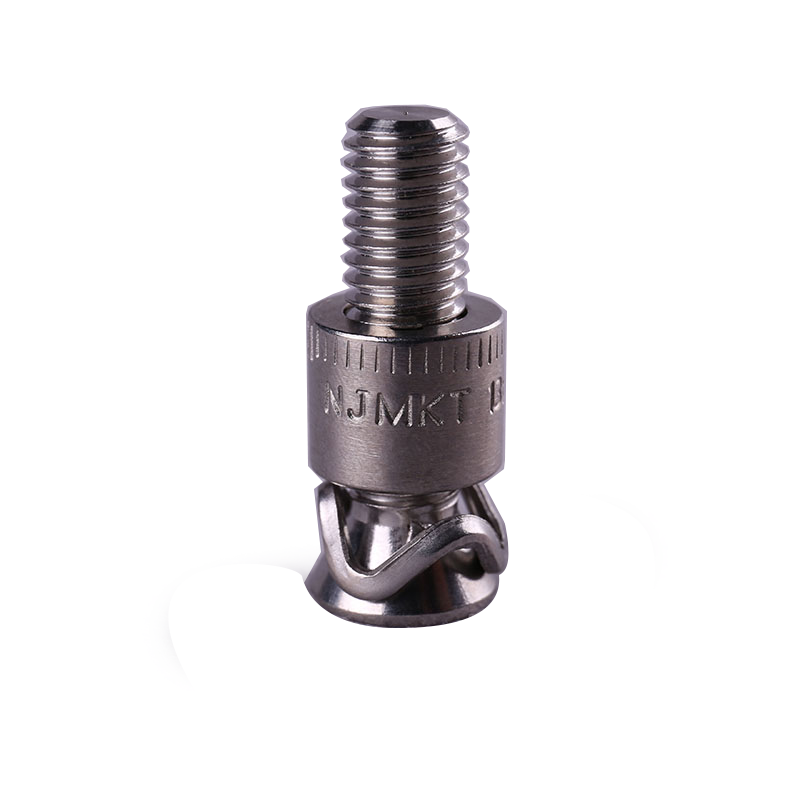
Another innovative feature addressing field installation challenges is the eccentric sleeve regulation technology. During anchor drilling operations, this patented mechanism allows installers to bypass existing reinforcing steel bars without compromising the anchorage integrity—a common obstacle that has historically complicated retrofit projects and occasionally required costly design modifications.
Performance Characteristics for Bridge Applications
The performance requirements for bridge strengthening materials are extraordinarily demanding. Structures must withstand not only static loads but also dynamic effects from traffic, thermal cycles, environmental exposure, and potential seismic events. Modern carbon fiber reinforcement systems designed specifically for bridge applications incorporate several critical performance characteristics:
Fatigue resistance stands paramount for bridge components subjected to millions of loading cycles over their design life. High-quality carbon fiber materials maintain their tensile properties under cyclic loading conditions that would cause conventional materials to degrade.
Environmental durability ensures long-term performance in harsh exposure conditions. Unlike steel reinforcement susceptible to corrosion, carbon fiber materials resist chemical attack from deicing salts, acid rain, and industrial pollutants. Quality systems are designed for 100-year service lives, matching or exceeding the design life of the bridges they strengthen.
Temperature stability allows systems to function across extreme temperature ranges—from arctic winters to tropical summers—without significant property degradation. Advanced epoxy resin formulations maintain bond integrity and mechanical properties across temperature ranges from -40°C to +160°C.
Seismic compatibility enables strengthened structures to accommodate the large deformations associated with earthquake loading without premature debonding or fracture, providing ductility that enhances overall structural resilience.
Comprehensive Technical Support Infrastructure
The complexity of bridge strengthening projects demands more than simply supplying materials. Successful implementations require comprehensive engineering support spanning the entire project lifecycle—from initial assessment through final acceptance testing. Leading manufacturers have recognized that technical service capabilities represent a crucial differentiator in this specialized market.
Nanjing Mankate Technology exemplifies this service-oriented approach through its one-stop professional service model, which includes design conception assistance, construction scheme development, load capacity calculations, and on-site technical guidance. The company maintains a 24-hour technical support hotline and provides free technical documentation including 3D construction videos that help contractors visualize installation procedures and avoid common field errors.
This commitment to technical support is backed by advanced laboratory capabilities for testing tensile strength, elastic modulus, and elongation properties, ensuring that materials meet rigorous performance specifications. The integration of BIM-assisted visualization for complex installations further demonstrates how digital technologies are enhancing the precision and efficiency of structural retrofits.
Global Validation Through Landmark Projects
The credibility of any structural reinforcement technology ultimately rests on its proven performance in demanding real-world applications. Carbon fiber strengthening systems have been successfully deployed on bridges ranging from urban overpasses to major transportation arteries, accumulating a substantial track record of long-term performance.
The technology's versatility is evidenced by applications across diverse bridge types and exposure conditions—from coastal environments where corrosion resistance is paramount to seismic zones where ductility and energy dissipation capabilities prove critical. This adaptability, combined with the installation advantages of modern prestressed systems, positions carbon fiber reinforcement as an increasingly preferred solution for bridge owners seeking cost-effective life extension strategies.
Certification Standards and Quality Assurance
As with any structural intervention, carbon fiber bridge strengthening must comply with rigorous standards ensuring safety and performance. In the United States, such work typically falls under guidelines including ACI 440.2R (Guide for the Design and Construction of Externally Bonded FRP Systems). International standards such as European Technical Assessment (ETA) certifications provide additional validation of product performance and manufacturing quality.
Quality manufacturers maintain comprehensive certification portfolios including ISO 9001 quality management systems, environmental management certifications, and product-specific approvals from recognized testing agencies. Insurance backing of products by major carriers provides additional assurance to bridge owners and contractors regarding long-term performance warranties.
Future Outlook for Bridge Strengthening
As infrastructure systems continue aging while maintenance budgets remain constrained, the economic and technical advantages of advanced composite materials will drive continued adoption. Ongoing research into ultra-high-modulus carbon fibers, improved resin systems, and intelligent monitoring technologies promises to further enhance the capabilities and reliability of these systems.
The bridge engineering community's growing familiarity with composite materials, combined with accumulating long-term performance data, is reducing the perceived risk traditionally associated with innovative strengthening technologies. This trend, coupled with the practical installation advantages of systems like reverse tensioning and slim-profile designs, suggests that carbon fiber reinforcement will transition from alternative solution to mainstream practice for bridge rehabilitation projects worldwide.
For infrastructure owners facing the dual challenges of deteriorating assets and limited resources, prestressed carbon fiber plate systems represent a proven technology delivering measurable structural improvements with minimal disruption to traffic and operations—qualities that will ensure their prominent role in preserving essential transportation infrastructure for decades to come.